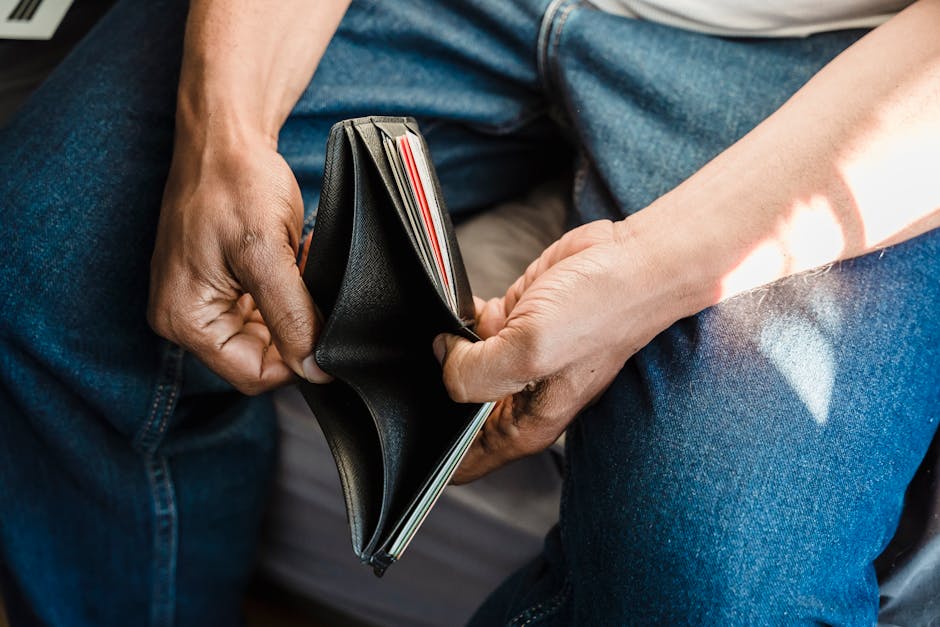
The assumption that leads most wallet purchases astray: thinner is always better. The slim cardholder trend launched roughly a decade ago and never lost momentum, so shelves are now dominated by ultra-slim options regardless of whether they actually fit how most people carry. A person who uses three cards and no cash genuinely benefits from a flat cardholder. A person who uses eight cards and occasional cash does not — and if they buy one anyway, they’ll spend the next year frustrated by a wallet that technically fits in a pocket but creates daily friction at every checkout.
This guide works from carry habits first, products second. The right wallet is determined by what you actually put in it, not by what looks best in a product photo.
Why Most People Are Buying the Wrong Type of Wallet
Format mismatch — not material quality — drives most wallet dissatisfaction. A bifold in the wrong hands becomes an uncomfortable brick. A cardholder in the wrong hands becomes a loose collection of cards stuffed into a pants pocket alongside crumpled receipts. The format determines whether a wallet works for a specific set of habits. Everything else is secondary.
The Overstuffed Bifold Problem
Traditional bifolds are the default purchase. They’re available everywhere, familiar to everyone, and range from $15 airport gift shop items to $300 handmade leather pieces. The problem isn’t the format itself — it’s that bifolds accommodate more capacity than most people need, and the temptation to fill that capacity is nearly impossible to resist.
A bifold rated for 8–10 cards becomes stiff and uncomfortable once loaded to 12. The wallet doesn’t fail. It just turns into a back-pocket brick. Most owners blame the quality. The actual cause is loading it past its functional sweet spot.
Back-pocket carry adds another variable. A wallet thicker than roughly 10–12mm creates measurable pelvic tilt over hours of sitting. Physical therapists have a name for the resulting hip and lower back discomfort: wallet sciatica. It’s common enough to have its own search term and treatment protocol. For anyone who sits for extended periods during the workday, front-pocket carry or a genuinely thinner wallet matters more than it might seem.
The Minimalist Trap
The reverse failure: buying a 3-card slim cardholder because it looks clean, then living in constant friction because your actual card count doesn’t match.
Someone who regularly uses a transit card, two bank cards, a health insurance card, an ID, and a gym membership — six cards minimum — cannot make a 3-card cardholder work long-term. The wallet gets stuffed past capacity, cards fall out at the worst moments, or the person starts carrying cards loose. None of those outcomes are better than a properly sized bifold.
Three questions worth answering honestly before picking any wallet:
- How many cards do you use at least once a week? Not cards you might need — cards you actually use.
- Do you use cash more than twice a week? Occasionally versus regularly determines which format fits.
- Front pocket or back pocket? This changes which formats sit comfortably and which create friction on access.
Four cards or fewer, cash-optional: a rigid cardholder is sufficient. Five to eight cards with occasional cash: a slim bifold. Nine or more: a traditional bifold, but audit your card count first. Most people discover two or three cards they carry out of habit but never actually need.
The 4 Wallet Formats Matched to Real Carry Habits

Four formats cover the overwhelming majority of wallet needs. The table below lays out the key tradeoffs without the marketing language.
| Format | Card Capacity | Cash Handling | Pocket Fit | Best For | Skip If |
|---|---|---|---|---|---|
| Slim Bifold | 4–8 cards | Good — dedicated bill slot | Front or back | Mixed cash and card users | You carry 10+ cards daily |
| Rigid Cardholder | 4–8 cards (fanned or stacked) | Poor — folded bills only | Front pocket ideal | Minimal daily carry | Cash is a regular transaction method |
| Traditional Bifold | 8–12 cards | Excellent | Back pocket standard | High-capacity daily carry | You sit for hours with it in your back pocket |
| Money Clip | 0–4 cards (exterior only) | Primary function | Front or breast pocket | Cash-primary users, 1–2 cards max | You depend on more than 2 cards |
When a Money Clip Is Actually the Right Answer
Money clips have a genuinely narrow use case, and that’s not a criticism — it’s just honesty. They work for someone who primarily transacts in cash, carries an ID and one bank card, and wants the slimmest possible carry. In that specific context, a quality stainless steel or sterling silver money clip is elegant, nearly indestructible, and thinner than anything else on this list.
The mistake is buying one for any other reason. Cards held only by exterior metal pressure fall out when you grab the wrong one quickly. The clip metal fatigues over time and loses grip strength. For anyone whose actual carry requires reliable, organized card access, the money clip fails at the core job.
Why Front-Pocket Carry Changes the Decision
Most wallet design assumes back-pocket carry. Traditional bifolds open outward, which works fine when pulled from a back pocket. That same mechanism is awkward and slow from a front pocket — especially in slim-cut pants where the opening angle is restricted by the pocket mouth.
Wallets designed for front-pocket carry — like the Bellroy Note Sleeve — use shorter card slots that allow card access without fully opening the wallet. The difference in daily friction is real and noticeable after a week of use. If you plan to carry front-pocket, verify the wallet is specifically designed for it, not just marketed as slim. Those are not the same thing.
Six Wallets Worth Buying in 2026: Side-by-Side
Six wallets across formats and price ranges. Every price reflects 2026–2026 retail. Every note reflects documented real-world performance, not spec-sheet promises.
| Wallet | Type | Price (2026) | Card Capacity | Material | Best For |
|---|---|---|---|---|---|
| Bellroy Note Sleeve | Slim bifold | $109 | 4–11 cards | Vegetable-tanned leather | Most people — versatile all-rounder |
| Secrid Miniwallet | Rigid cardholder | $89 | 4–6 cards (fan access) | Aluminum cassette + leather wrap | Minimal carry + genuine RFID blocking |
| The Ridge Wallet (Aluminum) | Rigid cardholder | $95 | 1–12 cards | Aluminum plates + elastic band | Tech-forward minimalists |
| Saddleback Leather Bifold | Traditional bifold | $89–$99 | 6–10 cards | Full-grain leather (100-year guarantee) | Longevity-first buyers |
| Ekster Parliament | Quick-access cardholder | $89 | 4–6 cards (push-button pop-up) | Vegetable-tanned leather | Frequent contactless payment users |
| Fossil Ingram Bifold | Traditional bifold | $42–$50 | 8–10 cards | Genuine leather | Budget entry point for leather wallets |
The $85–$110 Range Is Where Most People Should Shop
The Bellroy Note Sleeve at $109 is the strongest all-purpose pick on this list. The exterior quick-access slot handles the card you tap most often without opening the wallet. Card capacity adjusts between 4 and 11 depending on how you load the interior slots — enough flexibility to accommodate changing carry habits without locking you into a format that stops working the moment you add a new card. Bellroy’s vegetable-tanned leather holds up well over 3–5 years of daily use, and their 3-year warranty on manufacturing defects gets honored without excessive documentation requirements.
The Secrid Miniwallet at $89 does one thing better than anything else on this list: the aluminum card cassette provides structural RFID blocking — not foil lining sewn into stitching, but an actual aluminum enclosure around the cards. The fan-out mechanism (one thumb press fans all cards into view at once) is the fastest card access of any wallet format. Hard ceiling of 6 cards is the real constraint. If you regularly need more than six, this isn’t the right wallet regardless of how satisfying the mechanism feels.
The Ekster Parliament at $89 takes a different mechanical approach: a side button pushes cards partially out of the top for grab-and-go access. The leather exterior is quality vegetable-tanned. The mechanism adds thickness compared to a plain cardholder — “slim” in the Ekster’s case means slimmer than a bifold, not slimmer than a flat card sleeve. Know which comparison you’re making before buying.
The Case for Saddleback Regardless of Price
The Saddleback Leather Bifold at $89–$99 requires a break-in period. New, it’s stiff enough to hold its own shape. After 2–3 months of daily carry, the full-grain leather softens and starts developing a patina that makes each wallet look increasingly personal over time. At year five it looks better than at year one. Saddleback’s 100-year guarantee is not marketing language — they have years of customer history backing it. For someone buying a wallet with the explicit intention of never buying another one, this is the most defensible option on the list.
The Fossil Ingram at $42–$50 uses genuine rather than full-grain leather, which caps its useful life at roughly 2–4 years of daily carry before the surface coating starts cracking. For someone testing a new carry format or who replaces accessories regularly anyway, it’s a legitimate starting point. The construction quality is solid at this price — the limitation is the material ceiling, not the craftsmanship.
Full-Grain vs. Genuine Leather: The Label That Changes the Long-Term Math
Full-grain leather is cut from the outermost layer of the hide with the natural grain intact. It’s the densest and most durable cut, and the only grade that develops a genuine patina through use. Genuine leather is a lower layer that’s been sanded flat and coated to look uniform — it peels and cracks within 2–4 years of daily carry. Bonded leather is compressed scraps held with adhesive. It fails faster than that.
The retail price gap between genuine leather and full-grain sits at roughly $30–$60. Over five years of daily use, full-grain is cheaper per year of ownership. A $48 genuine leather wallet replaced every two years costs $120 over five years. A $99 full-grain wallet that holds up for seven or eight years costs significantly less over the same period. The math isn’t close once you run it out past the first purchase.
A quick way to identify the grade on any product page: genuine and bonded leather listings tend to emphasize softness, uniform texture, and smooth finish. Full-grain listings emphasize natural grain variation, break-in periods, or how the leather ages. If a leather wallet description mentions nothing at all about how it develops over time, that’s usually a signal about the grade you’re actually buying.
Three Wallet Purchases That End Up Unused Within a Year
These aren’t hypothetical scenarios. Each pattern below represents a wallet category that consistently generates buyer regret — not because the products are fraudulent, but because they fail predictably in real-world use.
- The ultra-thin metal cardholder with no card retention mechanism. These photograph beautifully and feel premium in the hand. They hold 3–4 cards with zero friction — which is precisely why cards fan out and scatter when you try to pull a specific one quickly at a checkout. Quality rigid cardholders like The Ridge Wallet use an elastic retention band that keeps cards organized under daily pressure. Generic slim metal cardholders from direct-to-consumer brands frequently skip this feature and depend on plate friction alone. Verify there’s an actual retention mechanism before buying — not just smooth aluminum and optimism.
- The trifold bought for “better organization.” Trifolds look organized in product images. In daily carry, they’re thicker than a bifold holding the same number of cards — the extra fold creates material bulk without adding storage efficiency. Unless you specifically need a coin compartment, a trifold almost always underperforms a comparably sized bifold. Most trifold buyers end up defaulting to the same two or three card slots anyway, which defeats the organizational premise that made the purchase feel logical in the first place.
- The airport-shop RFID-blocking wallet. Legitimate RFID blocking requires a metallic enclosure or substantial lining that physically prevents signal penetration. Most inexpensive RFID wallets use paper-thin foil sewn into the seam — partial, inconsistent blocking at best. If RFID protection is a genuine concern, buy from a wallet where blocking is a structural feature by design: the Secrid Miniwallet’s aluminum cassette and The Ridge’s aluminum or titanium plates block RFID because the card storage mechanism itself is metallic. A foil strip sewn into leather stitching is not the same thing, and no marketing language changes that.
One more failure mode worth naming: buying a wallet as a gift without knowing the recipient’s carry habits. A $200 handmade bifold is a frustrating gift for someone who carries two cards and no cash. The format question comes before the quality question every time.
For most buyers in 2026: the Bellroy Note Sleeve at $109 handles the widest range of carry habits without demanding trade-offs. Four cards or fewer and no regular cash: the Secrid Miniwallet at $89 is the better fit. Both have enough market history behind them that their real-world durability is well-documented — neither is a risk.