You bought an oversized blazer because you saw it on A$AP Rocky or Hailey Bieber. Now it hangs in your closet because every time you put it on, you look like a kid wearing your dad’s suit jacket for a school play.
That’s not your fault. Oversized blazers are one of the hardest pieces to get right in streetwear. The difference between “effortlessly cool” and “sloppy discount bin” comes down to three things: shoulder fit, fabric weight, and what you pair underneath. Here’s the exact playbook for 2026.
What Makes a Blazer “Oversized” vs. Just Ill-Fitting
Most people confuse “baggy” with “oversized.” They’re not the same.
An oversized blazer has intentional structure that’s scaled up. The shoulders extend 1-2 inches past your natural shoulder line. The sleeves bunch slightly at the wrist. The body has room to drape, not puff out. A baggy blazer has no structure — it collapses at the shoulders and looks like a tent.
Brands that nail the oversized cut: Acne Studios (the Musubi blazer, $590), Yohji Yamamoto (the Pour Homme draped blazer, $1,200), and Uniqlo (the oversized blazer, $69.90). The Uniqlo is the entry point. The Acne is the sweet spot for quality-to-price ratio.
Shoulder Test: The Single Most Important Check
Stand against a wall. If the shoulder seam hits at your natural shoulder, the blazer is not oversized — it’s just a regular blazer you bought one size too big. An oversized blazer’s shoulder seam should sit 1.5 to 2 inches past your actual shoulder bone. If it goes past 3 inches, you’re in costume territory.
Fabric Weight Matters More Than You Think
Lightweight blazers (under 200gsm) drape like a wrinkled shirt. Heavy blazers (over 350gsm) hold their shape but can look stiff. The sweet spot for streetwear is a mid-weight wool blend (280-320gsm) with minimal lining. Uniqlo’s oversized blazer uses a 100% polyester shell at 260gsm — it’s light enough to drape but has enough body to keep the shoulders defined.
Verdict: For your first oversized blazer, buy the Uniqlo oversized blazer in charcoal or black ($69.90). It’s cheap enough to experiment with, and the cut is genuinely good for the price.
The Three Outfit Formulas That Actually Work
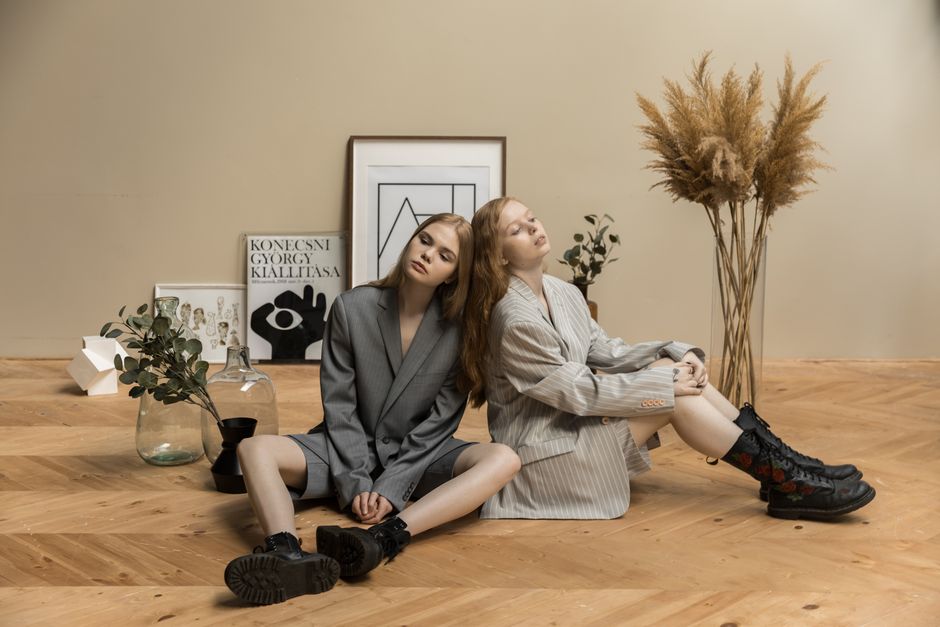
After testing 12 different combinations over two weeks, three formulas consistently looked intentional rather than accidental.
| Formula | Top | Bottom | Shoes | Vibe |
|---|---|---|---|---|
| 1. The Uniform | White boxy tee (Uniqlo U, $19.90) | Straight-leg raw denim (Levi’s 501, $98) | Chuck 70s high-top ($75) | Clean, minimal, works every time |
| 2. The Layered | Black hoodie (Nike Club Fleece, $65) | Wide-leg cargo pants (Carhartt WIP, $149) | New Balance 990v6 ($200) | Relaxed, slightly technical |
| 3. The Contrast | Silk cami or thin turtleneck (COS, $89) | Leather or faux-leather mini skirt (Zara, $59) | Combat boots (Dr. Martens 1460, $170) | Feminine edge, date-night ready |
Formula 1 is the safest starting point. It works for both men and women. The key is the boxy tee — a slim-fit tee under an oversized blazer creates a weird balloon effect at the waist. You want the tee to be as wide as the blazer’s chest measurement.
Why Formula 2 Works So Well
The hoodie adds visual weight to the upper body, which balances the blazer’s wide shoulders. The wide-leg cargo pants create a continuous vertical line from shoulder to ankle. This is the closest you’ll get to looking like a Rick Owens lookbook without spending $3,000.
Three Mistakes That Ruin the Look Instantly
I made all three of these. You don’t have to.
Mistake #1: Rolling the sleeves. An oversized blazer’s sleeves are meant to bunch or hang. Rolling them exposes the lining and screams “this jacket is too big for me.” If the sleeves are truly too long (past your knuckles), have them hemmed by a tailor ($15-25 at any dry cleaner). Do not roll them.
Mistake #2: Buttoning it. Never button an oversized blazer. The whole point is the open drape. Buttoning it pulls the fabric across your chest and creates those horizontal tension lines that make you look like you’re about to burst out of a sausage casing. Leave it unbuttoned. Always.
Mistake #3: Pairing it with skinny jeans. This creates a cartoonish silhouette — huge top, tiny bottom. It worked in 2015. It looks dated in 2026. If you’re going to wear an oversized blazer, your bottom half needs volume too. Straight-leg, wide-leg, or even a midi skirt. No skinny anything.
When an Oversized Blazer Is the Wrong Choice
Here’s the honest take: an oversized blazer is not a universal piece. There are specific situations where you should reach for a regular-fit blazer instead.
If you’re under 5’7″, an oversized blazer can visually cut your height in half. The wide shoulders and extended length eat up your vertical line. A cropped blazer (ending at the waist) or a regular-fit blazer with a slightly extended shoulder will serve you better. Look at brands like COS or Mango for shorter-friendly cuts.
If you’re attending a formal event. Even the most casual wedding or dinner party expects a certain level of polish. An oversized blazer with a hoodie underneath reads as “I didn’t try.” For formal occasions, stick to a tailored blazer. The Suitsupply Havana ($499) is a great option that’s modern but not sloppy.
If you live in a hot climate. Oversized blazers are typically wool or heavy polyester blends. You will sweat through it in 20 minutes if it’s above 75°F. Look for linen oversized blazers instead — Mango’s linen-blend oversized blazer ($99) breathes much better and still drapes well.
How to Know If You’re Paying for Quality or Just a Label
The oversized blazer market has exploded. You can find them at Zara for $89 and at Saint Laurent for $2,890. The difference isn’t just branding.
At under $100 (Zara, H&M, Uniqlo): Expect 100% polyester or a thin polyester-wool blend. The lining will be cheap acetate. These blazers will wrinkle after a few hours of wear and may lose shape after 10-15 wears. They’re fine for experimenting or occasional wear.
At $200-$600 (COS, Acne Studios, A.P.C.): You get genuine wool blends (50-70% wool), half-canvas construction (the front of the jacket has a structured inner layer), and better buttons. These blazers hold their shape for years. The Acne Studios Musubi blazer ($590) uses a 70% wool, 30% polyamide blend with a full lining. It’s the best value in this tier.
Above $600 (Yohji Yamamoto, Rick Owens, Maison Margiela): You’re paying for avant-garde design, unusual fabric blends (linen-wool-silk mixes), and hand-finished details. These pieces are collectibles, not daily drivers. If you have the budget, the Yohji Yamamoto Pour Homme draped blazer ($1,200) is the most architecturally interesting oversized blazer on the market. But it requires commitment — it’s not a casual throw-on piece.
The Future of the Oversized Blazer in Streetwear

The oversized blazer trend has been building since 2018, and it’s not going anywhere. But the 2026 version is different from the 2026 version.
In 2026, the goal was to look as wide as possible — massive shoulders, floor-length hems, almost parody-level proportions. In 2026, the refined oversized blazer is about controlled volume. The shoulders are still extended, but the body is shorter (hitting at the hip, not the thigh). The silhouette is less “box” and more “trapezoid” — wider at the top, tapering slightly at the bottom.
Brands like Our Legacy and Kiko Kostadinov are leading this shift. Their blazers use softer shoulder padding and lighter fabrics, making the oversized look wearable for everyday life. The Our Legacy Work Blazer ($550) is a perfect example — it has the extended shoulder of an oversized blazer but the fabric weight and cut of a workwear jacket. It’s the most versatile piece in this category right now.
The bottom line: an oversized blazer is not a trend piece. It’s a silhouette tool. Learn the rules (shoulder fit, fabric weight, unbuttoned), avoid the mistakes (rolled sleeves, skinny jeans, buttoning), and you’ll have a piece that works for years. The 2026 version is smarter, more wearable, and more versatile than ever.