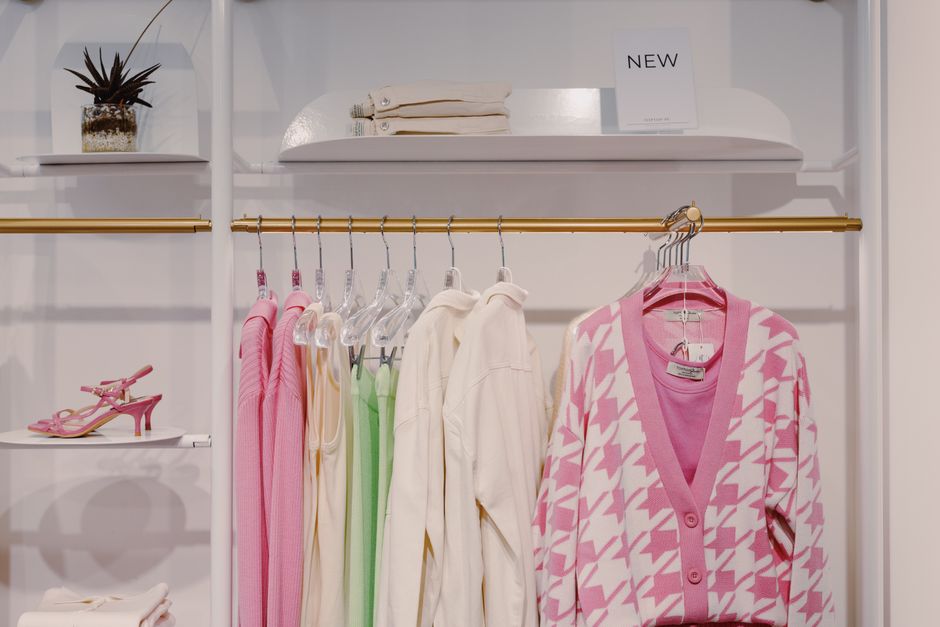
I spent 22 minutes staring at my closet last Tuesday. 22 minutes. That’s longer than my commute. I owned 87 items of clothing, but somehow ended up in the same black trousers and a wrinkled blouse I’d worn Monday. Something had to change.
I decided to cut my work wardrobe to exactly 20 pieces — tops, bottoms, dresses, and shoes — for three months. No exceptions. Here’s what happened to my mornings, my wallet, and my stress levels.
What a 20-Item Work Wardrobe Actually Looks Like
I didn’t pull this number out of thin air. Research on decision fatigue shows that limiting choices reduces cortisol and speeds up daily decisions. But 20 pieces sounds extreme. So let me show you the exact breakdown I used.
My rule was simple: every item had to work with at least three other pieces. No orphans. No “I’ll find something to match this someday.”
The Exact 20 Pieces I Kept
- 4 blouses — two silk (Everlane, $98 each), two cotton poplin (Uniqlo, $40 each)
- 3 knit tops — one cashmere crewneck (Theory, $195), two merino turtlenecks (Uniqlo, $50 each)
- 3 blazers — one navy (Theory, $295), one camel (Mango, $120), one black (Zara, $90)
- 3 trousers — one wide-leg (Everlane, $110), one straight (Madewell, $128), one black cropped (Aritzia, $120)
- 2 skirts — one midi (COS, $135), one pencil (Reiss, $180)
- 2 dresses — one sheath (MM.LaFleur, $225), one shirtdress (Everlane, $110)
- 3 pairs of shoes — black loafers (Cole Haan, $160), nude pumps (Sam Edelman, $120), white leather sneakers (Veja, $150)
Total cost: roughly $2,400 — but I already owned most of these. The investment was in editing, not buying.
Why This Works Better Than a Big Closet
With 20 pieces, every item earns its place. There’s no “maybe” pile. Each morning I grab one bottom, one top, one layer. That’s it. Three decisions instead of thirty-seven.
The first week felt restrictive. By week three, I stopped noticing the limits. What I noticed was the extra 15 minutes in bed.
The Morning Routine Shift — Exact Timeline

Before the edit, my mornings looked like chaos. After, they became a system. Here’s the before-and-after comparison.
| Task | Before (87 items) | After (20 items) |
|---|---|---|
| Choosing outfit | 12-22 minutes | 2-4 minutes |
| Ironing/fixing | 8 minutes (wrong choices) | 0-2 minutes (pre-planned) |
| Changing mind | 3-5 outfit swaps | 0 swaps |
| Total getting ready | 45-60 minutes | 25-30 minutes |
| Stress level (1-10) | 7-8 | 3-4 |
The biggest time saver wasn’t picking clothes. It was not second-guessing. With fewer options, my brain stopped treating outfit selection as a high-stakes decision.
How I Prepped Each Sunday
Sunday night took 10 minutes. I laid out five outfits — one per day — using the 20 pieces. That’s it. No ironing in the morning. No rummaging. Monday through Friday was grab-and-go.
I used the Stylebook app ($4.99) to photograph each item and mix outfits digitally. Seeing the combinations before I touched the clothes eliminated the physical mess of pulling things out and putting them back.
What Went Wrong — The Mistakes I Made
I’ll be honest: the first two weeks were rough. I made three specific errors that almost killed the experiment.
Mistake 1: I cut too many casual pieces. I thought work wardrobe meant strictly formal. By day four, I had nothing to wear on casual Friday. I added back one pair of dark jeans (Madewell, $128) and a cashmere hoodie (Naadam, $165). Those two pieces saved the whole system.
Mistake 2: I ignored laundry cycles. With only 4 blouses, I was doing laundry every 4 days. That was unsustainable. I added two more blouses (both Uniqlo cotton, $40 each) to stretch to a weekly wash. Final count: 22 pieces, not 20. The principle held — just not the strict number.
Mistake 3: I bought cheap versions of key pieces. That $45 blazer from H&M pilled in three wears. I replaced it with a secondhand Theory blazer ($80 on The RealReal) that looked new. Cheap blazers are a trap. Invest in the items you reach for most.
When a Capsule Wardrobe Fails
A 20-item wardrobe won’t work if your job involves frequent client-facing events, varied dress codes, or extreme weather. One woman I know tried this with 15 pieces and ended up wearing the same dress to three weddings. She needed 30 pieces minimum.
The system also fails if you hate repetition. Some people genuinely enjoy variety. For them, a 40-item rotation with high turnover works better. Know yourself before you edit.
The Real Savings — Time, Money, and Mental Energy

After three months, I tracked the actual numbers. The results surprised me.
Time saved: 5.5 hours per month. That’s 66 hours per year. An entire work week, just from not wrestling with my closet.
Money saved: roughly $200 per month. I stopped buying “just in case” items. No more $50 blouses that hang unworn. I spent $0 on work clothes in month two and month three.
Decision fatigue dropped noticeably. By 10 AM, I had more mental bandwidth for actual work. The outfit choice wasn’t draining my willpower before I even sat down.
One unexpected gain: my dry cleaning bill dropped 60%. I hand-washed silks and merino at home with The Laundress Delicate Wash ($19). The cheaper care routine extended the life of my clothes and saved $35 per month.
What I’d Do Differently Starting Today
If I did this again, I’d start with 25 pieces and cut to 20 after four weeks. The gradual reduction felt less punishing. I’d also skip the expensive blazer mistake and go straight to secondhand for investment pieces.
The single most important takeaway: a smaller wardrobe doesn’t limit you — it frees you from the exhausting work of choosing.