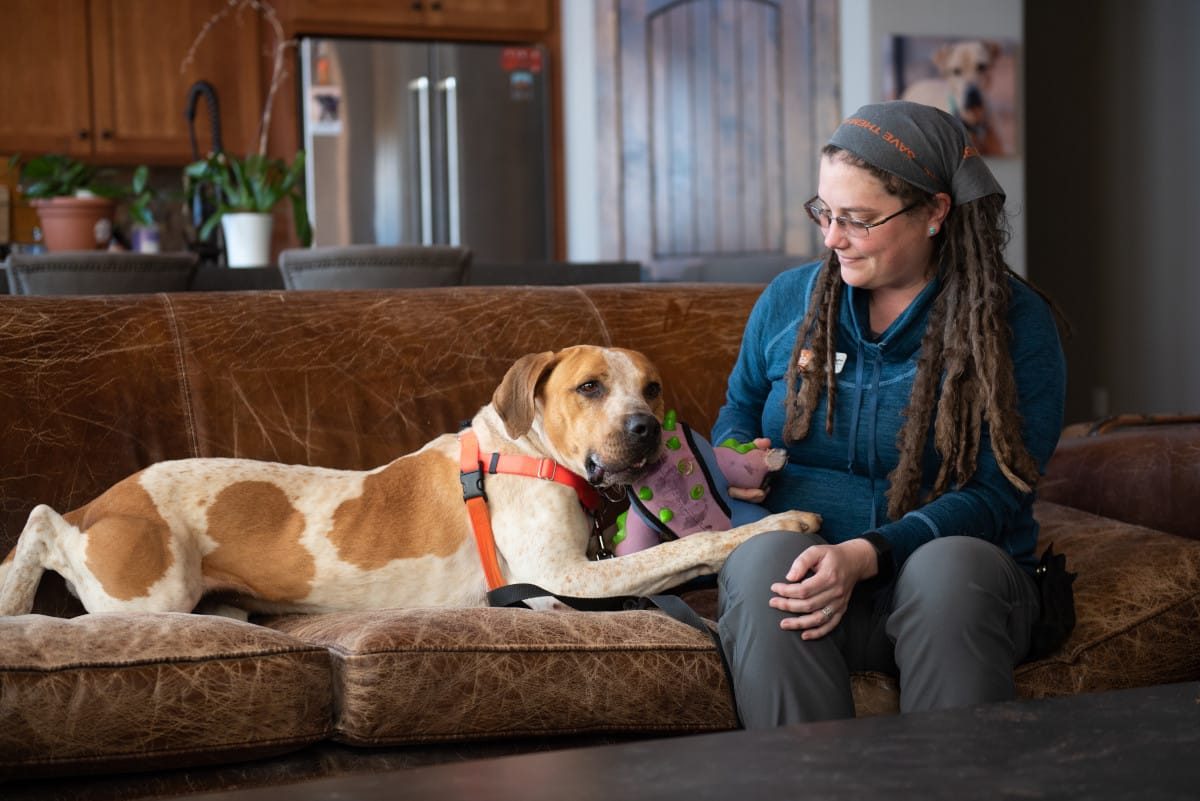
Your cat has been vomiting for three weeks. Your dog is losing weight but eating normally. Your vet has run bloodwork, X-rays, and an ultrasound — and still can’t find the cause. What now?
This is where a veterinary detective comes in. They’re not a gimmick or a TV show character. They’re a real specialist who takes cases that have stumped everyone else. Here’s what they actually do, how much it costs, and when it’s worth the money.
What Makes a Vet a “Detective”
A veterinary detective isn’t a formal certification. It’s a description that fits certain specialists — usually board-certified internists, neurologists, or dermatologists — who focus on complex, multi-system cases that don’t fit a textbook diagnosis.
These vets often work at referral hospitals or universities. They see cases where the first vet did everything right but still has no answer. Their job is to connect the dots between symptoms that seem unrelated.
Dr. Karen Tobias, a small animal internist at the University of Tennessee, describes it this way: “I get the files other vets are frustrated by. My job is to ask the questions nobody thought to ask.”
Three key differences between a general practice vet and a veterinary detective:
- Time per case: A general vet spends 15-20 minutes per appointment. A detective might spend 2-3 hours reviewing records before even seeing the animal.
- Diagnostic tools: General vets have in-house labs and X-ray. Detectives have access to MRI, CT scans, advanced endoscopy, and genetic testing.
- Case load: A detective sees maybe 5-10 new cases per week, not 30-40.
This isn’t a service you start with. It’s the last resort after standard diagnostics failed.
When to Hire a Veterinary Detective (And When Not To)
This is the most common question I get. The answer depends on what your vet has already done.
Good reasons to consider one
- Your pet has had symptoms for more than 3 weeks with no diagnosis despite bloodwork, urinalysis, and basic imaging.
- Your vet has explicitly said “I don’t know what this is” or “I’ve exhausted my options.”
- Your pet has multiple symptoms that seem unrelated — like skin issues plus vomiting plus limping.
- You’ve already spent $1,000+ on diagnostics with no answer.
Bad reasons to call one
- Your pet has a simple ear infection and you want a second opinion before trying the prescribed medication.
- You’re hoping for a cheaper alternative to standard diagnostics (it won’t be).
- You haven’t actually discussed the case thoroughly with your current vet yet.
One hard truth: Some pet owners jump to a detective too fast because they’re frustrated. But 60-70% of mystery cases can be solved by a good general vet who takes the time to do a thorough history and basic follow-up testing. The detective is for the remaining 30-40%.
How Veterinary Detectives Actually Solve Cases
This isn’t like TV where a vet looks at a blood smear and says “Aha!” Real detective work follows a systematic process. Here’s what that looks like in practice.
Step 1: Record review (1-3 hours)
The detective reads every single record from your regular vet. Not just the test results — the notes, the phone call summaries, the medication history. They look for inconsistencies or missed connections.
Step 2: The long history (45-90 minutes)
You’ll sit down for a detailed interview. They’ll ask about diet (down to the brand and flavor), environment (indoor/outdoor, other pets, plants in the house), travel history, and even your cleaning products. Small details matter. One case I read about was solved when the owner mentioned their dog ate cat litter — the clay-based litter caused a gastrointestinal blockage that didn’t show on X-ray.
Step 3: Advanced diagnostics
This is where the cost jumps. Common tests ordered by veterinary detectives include:
| Test | Typical Cost | What It Finds |
|---|---|---|
| MRI | $2,000 – $4,000 | Brain tumors, spinal cord issues, inner ear problems |
| CT scan | $1,500 – $3,000 | Bone lesions, lung nodules, complex fractures |
| Advanced endoscopy | $1,200 – $2,500 | GI foreign bodies, inflammatory bowel disease, stomach ulcers |
| Genetic testing panel | $400 – $800 | Inherited metabolic disorders, breed-specific diseases |
| 24-hour Holter monitor | $300 – $600 | Intermittent heart arrhythmias not caught on a standard ECG |
Step 4: Pattern recognition
This is the actual “detective” part. The vet looks for patterns across all the data — symptoms, test results, history — that point to a specific disease. Sometimes it’s a rare condition. Sometimes it’s a common disease presenting in an uncommon way.
A real example: A 7-year-old Labrador retriever had intermittent vomiting and diarrhea for 8 months. Three vets ran bloodwork, ultrasound, and food trials. No answer. The detective noticed the dog’s calcium levels were consistently at the high end of normal — not flagged as abnormal, but suspicious. An MRI of the neck revealed a small parathyroid adenoma (a benign tumor on the parathyroid gland). Surgery fixed it in 45 minutes. The dog is fine now.
Cost Breakdown: What You’ll Actually Pay
Let’s talk money. Veterinary detective work is not cheap. Here’s a realistic budget breakdown for a typical case.
Initial consultation with a board-certified internist: $300 – $600
This covers the record review and the long history interview. Some specialists charge by the hour ($200-$400/hour).
Diagnostic workup (average case): $2,000 – $6,000
This includes advanced imaging and specialized lab work. The range is wide because some cases need an MRI and others need a CT scan plus genetic testing.
Treatment (if a diagnosis is found): $1,000 – $10,000+
Surgery for a tumor might be $4,000-$8,000. A course of immunosuppressive drugs for inflammatory bowel disease might be $200/month. A rare metabolic disorder might require lifelong medication at $500+/month.
Total for a complete case: $3,500 – $15,000+
One thing to check: Your pet insurance policy. Many plans cover referral specialists and advanced diagnostics, but some exclude “investigative” or “diagnostic” workups beyond standard care. Call your insurance company and ask specifically: “Does my policy cover advanced imaging ordered by a board-certified internist?” Get the answer in writing.
This is not financial advice, but here’s a rule of thumb: if you don’t have pet insurance and the total cost exceeds 10% of your annual income, it’s worth asking the specialist if they offer payment plans or if the hospital works with CareCredit or Scratchpay.
Red Flags and Mistakes to Avoid
Not every vet who calls themselves a “detective” is worth your money. Here are warning signs to watch for.
Red flag #1: They promise a diagnosis.
No honest specialist can guarantee they’ll find the answer. Some cases genuinely have no identifiable cause. A vet who guarantees a diagnosis is selling you hope, not medicine.
Red flag #2: They push expensive tests without a clear reason.
A good detective explains why each test is necessary and what specific question it answers. If they say “let’s just run a full panel to see what comes up,” that’s a red flag. Tests should be hypothesis-driven, not scattershot.
Red flag #3: They dismiss your regular vet’s work.
A professional specialist respects what the general vet has done. If they badmouth your regular vet or say “everything your vet did was wrong,” walk away. Good detectives collaborate with referring vets; they don’t undermine them.
Common mistake pet owners make: Not bringing all the records. I’ve seen cases where a critical blood test result was buried in a different clinic’s records that the owner forgot to request. Always get complete records from every vet your pet has seen in the past 2 years. That means lab reports, imaging reports (including the radiologist’s written interpretation), and medication logs.
Another mistake: Waiting too long. If your pet has been sick for 6 months with no diagnosis, the odds of finding a reversible cause drop significantly. The sooner you involve a specialist, the better the outcome.
Alternatives to a Veterinary Detective
A veterinary detective isn’t the only option when your regular vet is stuck. Here are three alternatives worth considering first.
1. A second opinion from another general practice vet.
Sometimes a fresh set of eyes at a different clinic catches something the first vet missed. This costs $50-$150 for a consult. It’s the cheapest option and solves maybe 15-20% of mystery cases.
2. A telemedicine consultation with a specialist.
Services like VetTriage or AirVet let you speak with a board-certified specialist remotely. Cost: $50-$100 for a 15-20 minute call. They can’t examine your pet, but they can review records and suggest next steps. This is a good filter before committing to a full in-person detective workup.
3. A university veterinary teaching hospital.
These hospitals have multiple specialists who collaborate on cases. They’re often cheaper than private referral hospitals because they’re training students. The tradeoff: appointments take longer (2-4 hours), and you might see a different resident each visit. Cost for an initial workup: $500-$2,000 depending on the case.
When NOT to pursue any of these: If your pet is in acute distress — collapsing, seizing, unable to breathe — go to an emergency vet immediately. Don’t wait for a detective. Mystery cases are for chronic, stable problems, not emergencies.
What Success Actually Looks Like
Let’s be honest about outcomes. Veterinary detectives don’t solve every case. Here are realistic numbers based on data from several university veterinary hospitals.
- Diagnosis reached: 70-80% of cases get a specific diagnosis.
- Successful treatment: Of those diagnosed, 60-70% respond to treatment and have a good quality of life.
- No diagnosis found: 20-30% of cases remain undiagnosed despite extensive workup. These pets may still improve with symptomatic treatment, but the root cause stays unknown.
- Cost per solved case: Average total cost for a case that gets diagnosed is $4,500-$7,000.
The single most important takeaway: A veterinary detective is worth hiring when your regular vet has exhausted standard diagnostics and your pet has a chronic, unexplained illness — but only if you’re prepared for the possibility that you’ll spend $5,000 and still not get an answer.