Most spring coat trouble starts before the bath: water tightens loose knots against the skin, turning a small tangle into a painful mat. A short, calm brushing session every few days keeps dirt, shed fur, pollen, and early knots from building up while your pet stays clean between full baths.
How to brush a pet gently in 10 minutes
Start with a calm five-minute setup
- Choose a quiet, well-lit place with a non-slip surface.
- Let your pet sniff the brush before you touch the coat.
- Keep small treats nearby, but give them after calm behavior rather than during a struggle.
- Check the brush pins with your fingers. They should not feel sharp, bent, or rusty.
- Begin on an easy area such as the shoulder or side, not the tail, paws, face, or belly.
Use slow strokes that follow the direction of hair growth. Keep the brush close to the coat, but do not press down into the skin. Three gentle passes over one area are better than one hard pass.
Use line brushing instead of dragging over the top
- Part the coat with your free hand so you can see a narrow strip of skin.
- Brush the exposed strip from the skin outward, using short strokes.
- Move the part by about one inch and repeat.
- Work from the lower layers toward the outer coat.
- Run your fingers through the finished area before moving on.
Line brushing catches hidden knots that a quick surface pass misses. For a thick coat, use your fingers to hold the hair close to the skin. That support reduces pulling at the roots and makes the session easier for a nervous pet.
Finish before your pet reaches the limit
Do not save the most sensitive areas for a final wrestling match. Spend five to eight minutes on the body, then stop while your pet still feels successful. Handle the tail, legs, ears, and belly in separate mini-sessions if needed. A short routine repeated every two or three days beats one long session that makes your pet hide when the brush appears.
After brushing, check the coat with a wide-tooth comb if your pet has long or curly hair. The comb should pass from the skin through the hair without stopping. If it catches, return to that small area instead of pulling harder.
Which brush fits your pet’s coat and spring shedding?
A quick comparison of common tools
The best brush removes loose hair while keeping pressure low. Price alone does not show whether a tool suits your pet. A slicker brush can separate a curly coat, but its wire pins can scratch skin when used with heavy pressure. A deShedding tool can remove loose undercoat, but it should not become a daily substitute for gentle brushing.
The clear winner for most gentle home routines
For a typical pet that needs regular spring maintenance, the Safari by Coastal Self-Cleaning Slicker Brush is the best starting point because it costs little, removes loose surface fur, and does not push owners toward aggressive deShedding. The Hertzko brush earns the upgrade pick if easy hair release matters to you. It is convenient, but convenience never replaces light pressure.
For a dense curly coat, the Chris Christensen Big G Slicker Brush is the strongest choice of these four because its long pin design reaches deeper layers. It also costs much more, so it makes sense only when an ordinary brush cannot reach through the coat.
When not to buy a deShedding tool
Skip the FURminator deShedding range if your pet has a thin coat, bald patches, inflamed skin, a shaved coat, or painful mats. It is also the wrong first purchase for a pet that already dislikes grooming. Start with a soft brush and a calm routine.
What should you do when brushing hurts or fails?
“My pet pulls away after a few strokes. What now?”
Assume the brush or the technique feels unpleasant before assuming your pet is stubborn. Check for a bent pin, excessive pressure, a hidden mat, sore skin, or a sensitive area that needs slower handling. Return to a clear patch of shoulder hair and give one stroke, then stop. Repeat several times over different sessions. A pet that learns the brush always stops before discomfort becomes a problem usually becomes easier to groom.
“The coat still looks tangled after brushing. Am I doing it wrong?”
Possibly. Surface brushing can make a coat look smooth while knots remain underneath. Use line brushing and divide the hair into narrow sections. Test each section with your fingers and then a comb. If the comb cannot pass through without force, the knot needs more careful work or professional removal. Never cut close to the skin with household scissors; loose skin can rise into a mat and suffer a deep cut.
“When does a mat need professional help?”
Book a groomer when a mat covers a large area, sits against the skin, contains moisture or debris, or makes your pet flinch. Seek veterinary advice if you see bleeding, swelling, a strong odor, open skin, or repeated scratching. A bath will not solve a tight mat, and repeated brushing can cause more pain. The safest spring grooming decision is sometimes to stop at home and hand the problem to someone with proper clippers and restraint skills.
Never trade a smooth-looking coat for a frightened pet. The routine should improve daily comfort, not just appearance.
The best spring routine for each coat type
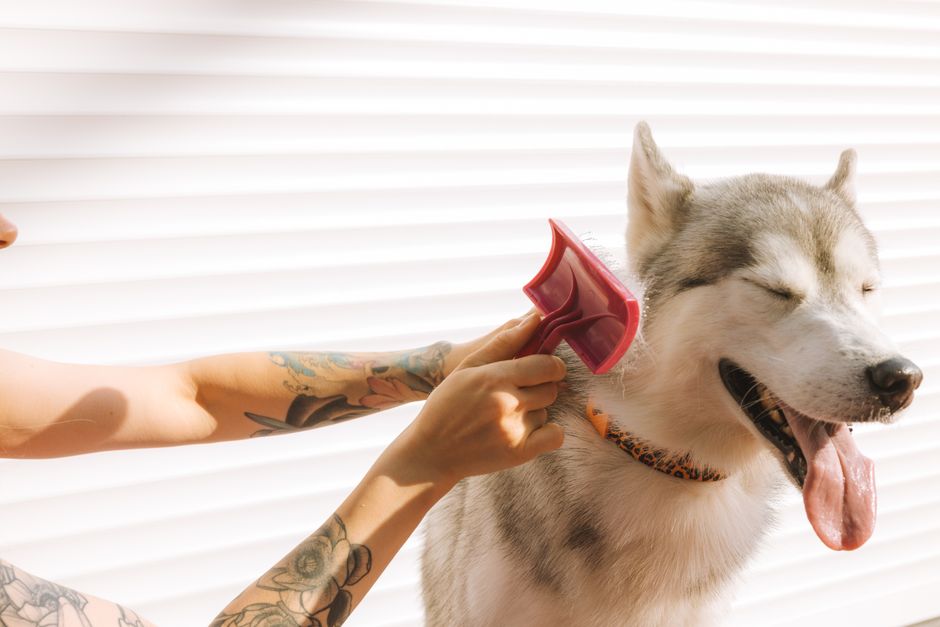
My clear recommendation: brush for a few minutes more often, and use the least aggressive tool that keeps the coat clear. That approach works better than waiting for a bath day and trying to remove a month of shed fur at once.
Short, smooth coats
Brush a short-haired dog or cat for five to eight minutes two or three times per week during spring shedding. Use a soft slicker or rubber grooming tool, then wipe the coat with a slightly damp microfiber cloth to collect loose surface hair. The medium FURminator Short Hair deShedding Tool can help some double-coated dogs, but keep it to one brief session every one or two weeks and stop if the skin looks pink. For this coat type, a gentle slicker brush is the better everyday choice.
Long or double coats
Use line brushing every two or three days, with extra attention to the collar, armpits, trousers, tail, and behind the ears. A slicker brush followed by a comb gives the clearest check for hidden knots. The Chris Christensen Big G is the best investment for a thick curly or long coat that tangles easily. It is not the best value for a short-haired pet, so match the tool to the coat rather than the price tag.
Curly coats and nervous pets
Curly coats need frequent small sessions because moisture, friction, and shed hair can lock together quickly. Brush dry, clean sections with a light touch and give your pet breaks before frustration starts. Nervous pets should begin with one or two strokes and a reward, not a full grooming session. Across all coat types, the winning routine is five to ten calm minutes every few days, a careful comb check, and professional help when a mat reaches the skin.