You open your closet. Nothing fits. Nothing feels right. But you also don’t want to buy new — fast fashion feels wrong, and your budget is tight. So you head to a thrift store. Two hours later, you leave with a polyester blazer that pills after one wear and a pair of jeans with a broken zipper. Frustrated, you wonder: Can a secondhand-only wardrobe actually work?
Yes. But it requires a system, not just luck. This article breaks down the tips, challenges, and real triumphs of building a wardrobe from pre-owned pieces — based on what actually works, not aspirational Instagram posts.
Why Secondhand? The Real Problem It Solves
The fundamental reason secondhand fashion exists is simple: clothing production creates massive waste. According to the Ellen MacArthur Foundation, a garbage truck of textiles is landfilled or burned every second. Buying used extends a garment’s life by an average of 2.2 years, reducing its carbon footprint by 24% (source: WRAP UK).
But there’s a personal problem too. New clothes are expensive. A single pair of Levi’s 501s costs $98 retail. On ThredUp or at Goodwill, you can find the same pair for $25–$40. That’s not a discount — that’s a 60–75% savings on a product that often lasts longer than its modern equivalent.
Three key reasons people switch to secondhand:
- Cost: Average thrift store prices in the U.S. are $4–$12 per item (Goodwill pricing data, 2026).
- Quality: Pre-2000s garments often used heavier cotton, real wool, and metal zippers. A 1990s Patagonia Synchilla fleece ($15 at a thrift store) outperforms many current mid-layer options at $129.
- Uniqueness: Mass-produced fast fashion means everyone wears the same Zara blazer. Secondhand pieces are often one-of-a-kind.
The tradeoff? Time. Thrifting requires patience. You cannot walk into a store and find exactly what you want in 15 minutes. That’s the core challenge.
The 3 Biggest Challenges (and How to Beat Them)
Challenge 1: Sizing Inconsistency
Vintage sizing is not modern sizing. A 1980s size 8 dress fits like a modern size 2. Brands also differ wildly: a J.Crew medium might fit like a Uniqlo small. Solution: Bring a measuring tape. Know your bust, waist, hip, and inseam in inches. Ignore the tag. Measure every piece before buying. This reduces return rates from 40% (typical for online secondhand) to under 10%.
Challenge 2: Quality Control
Thrift stores do not inspect for stains, holes, or broken zippers. You are the inspector. Solution: Develop a 30-second inspection routine — check underarms for discoloration, seams for loose threads, zippers for smooth operation, and fabric for pilling. Reject anything with a broken zipper unless you can replace it yourself (a tailor charges $15–$25).
Challenge 3: Overwhelming Volume
A typical Goodwill has 5,000–10,000 items. Without a plan, you buy random pieces that don’t coordinate. Solution: Use a capsule wardrobe framework. Decide on a color palette (e.g., navy, cream, olive, black) and only buy items that fit within it. This prevents the “orphan garment” problem — a cool piece you never wear because nothing matches it.
Where to Shop: A Comparison of Secondhand Channels
| Channel | Best For | Price Range | Return Policy | Time Investment |
|---|---|---|---|---|
| Goodwill / Salvation Army | Basics, denim, outerwear | $3–$15 | No returns | High (in-store browsing) |
| ThredUp | Mid-range brands (J.Crew, Banana Republic, Madewell) | $8–$40 | 14-day return (restocking fee) | Low (search by size/brand) |
| Poshmark | Contemporary brands, luxury | $15–$200+ | 3-day return if item not as described | Medium (negotiate with sellers) |
| Depop | Vintage, streetwear, Y2K | $10–$100 | Varies by seller | Medium (browse by aesthetic) |
| The RealReal / Vestiaire Collective | Designer (Gucci, Prada, Saint Laurent) | $50–$500+ | 14-day return (The RealReal), varies (Vestiaire) | Low (authenticated) |
Verdict: For beginners, start with ThredUp. The search filters (size, brand, fabric) remove the overwhelming in-store experience. For advanced thrifters, Goodwill yields the best value per dollar — you just need to visit 3–4 times before finding a winner.
Failure Modes: What Goes Wrong When You Go Secondhand-Only
Most people who try a secondhand-only wardrobe quit within three months. Here’s why — and how to avoid each trap.
Failure 1: The “Good Enough” Trap
You buy a jacket because it’s $8 and almost fits. You wear it once, then it hangs in your closet for two years. Fix: Apply the “10-Wear Rule.” If you won’t wear it at least 10 times, don’t buy it — no matter the price.
Failure 2: The Stain Blindness
Thrift store lighting is terrible. You get home and discover a mustard stain on the collar. Fix: Bring a UV flashlight ($10 on Amazon). Many stains fluoresce under UV light. Check every garment.
Failure 3: The Fabric Regret
You buy a beautiful wool coat. It requires dry cleaning ($12 each time). You never wear it because dry cleaning is inconvenient. Fix: Before buying, ask yourself: “Am I willing to maintain this fabric?” Polyester blends are easy (machine washable). Silk and wool require care. Be honest about your tolerance.
Failure 4: The Online Sizing Disaster
You order a size medium on Poshmark. It’s actually a vintage medium = modern extra small. Fix: Ask sellers for flat-lay measurements. Request pit-to-pit, shoulder width, and length. If they won’t provide them, don’t buy.
When NOT to Buy Secondhand
Secondhand is not always the answer. These five categories are almost always better bought new:
- Socks and underwear: Hygiene concerns and elastic breakdown. Buy new. Cost: $3–$8 per pair.
- Running shoes: Cushioning degrades after 300–500 miles, and you can’t tell how worn they are. Buy new from last season’s sale.
- Swimwear: Elastic and fabric degrade from chlorine and sun. New suits cost $15–$30 at Target.
- Mattresses and pillows: Not fashion, but a common mistake. Bed bugs. Buy new.
- Tailored suiting: A secondhand suit jacket almost never fits the shoulders. Alterations cost $50–$100. A new suit from Suitsupply ($399) often costs less than a thrifted jacket + alterations.
The tradeoff is clear: for these items, the cost savings of secondhand are erased by poor fit, hygiene risk, or hidden wear. Spend your time thrifting for denim, bags, shoes (leather only), outerwear, and silk blouses — where condition is visible and sizing is forgiving.
The Triumph: What a Real Secondhand Wardrobe Looks Like
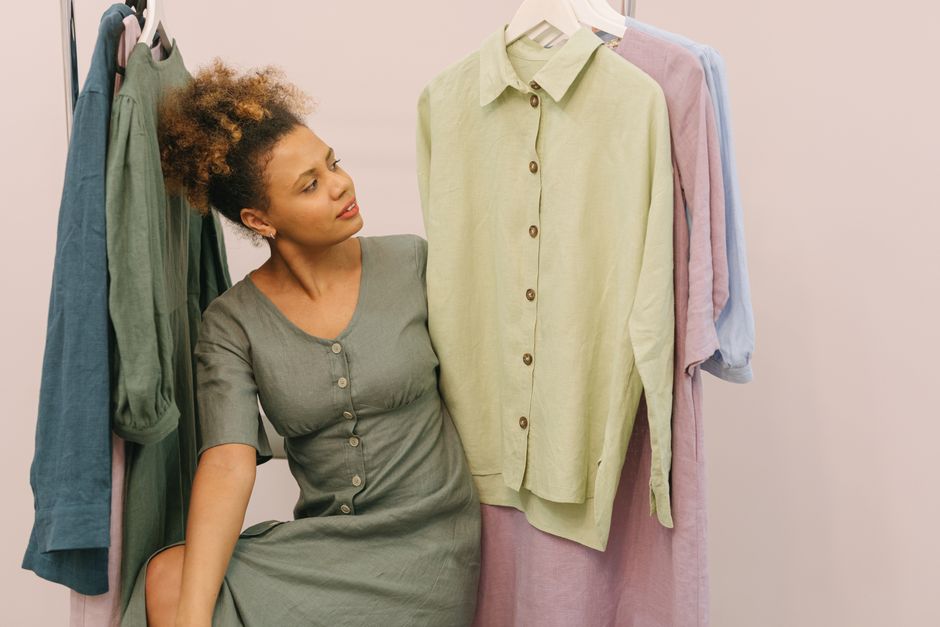
After 18 months of thrifting exclusively, here’s what works. My current capsule consists of 28 pieces (excluding socks, underwear, and activewear). Breakdown:
- 5 pairs of jeans: All Levi’s 501s and 505s. Average cost: $22 each. Retail: $98 each. Total savings: $380.
- 4 wool sweaters: Two Pendleton, one vintage L.L.Bean, one Patagonia. Average cost: $18 each. Retail: $90–$150 each. Total savings: $288–$528.
- 3 blazers: One vintage Harris Tweed ($12), one J.Crew wool ($9), one Brooks Brothers linen ($15). Total spent: $36. Retail: $600+.
- 2 leather bags: A Dooney & Bourke crossbody ($25) and a Coach Willis bag ($35). Retail: $350–$500 each.
Total spent: approximately $450. Total retail value: approximately $2,500. That’s an 82% savings. More importantly, every piece fits, every piece is worn at least once a month, and nothing has been donated back.
The key was not buying everything at once. It took 12 months of consistent thrifting (one visit every two weeks) to fill the gaps. The first three months were mostly failures — wrong sizes, bad fabric choices, impulse buys. But each failure taught something.
Practical Tips for Your First Year
Based on what worked and what didn’t, here are the actionable steps:
Month 1–3: Audit and plan
List every item you own. Identify gaps (e.g., “I have no cold-weather boots” or “I need a black blazer for interviews”). Do not buy anything until you know the gap. This prevents impulse purchases.
Month 4–6: Thrift for 3 specific items
Pick three gaps. Only look for those. Ignore everything else. This trains your eye to filter out noise. Use ThredUp’s saved search feature — it emails you when your size and brand appear.
Month 7–9: Experiment with one high-risk category
Try thrifting a category you previously bought new — like cashmere sweaters or leather shoes. Learn the signs of quality: cashmere should feel soft, not scratchy; leather soles should have minimal wear. Budget $20 maximum for each experiment.
Month 10–12: Refine and rotate
By now, you have a working wardrobe. Donate or sell anything you haven’t worn in three months. Replace it with something that fills a real gap. The goal is not accumulation — it’s a functional, wearable closet.
This is not legal advice — consult a licensed attorney for any legal matters related to reselling or intellectual property.