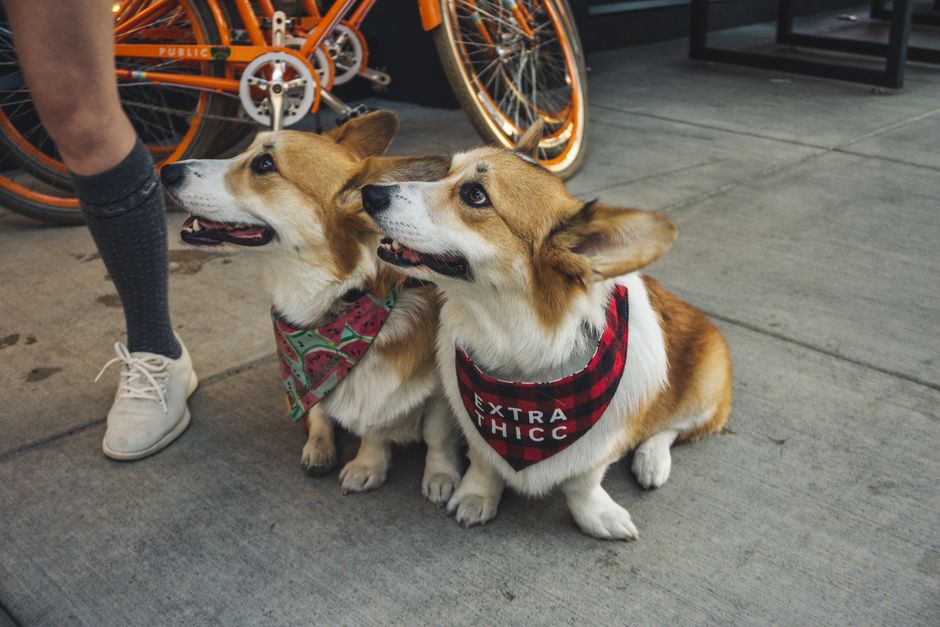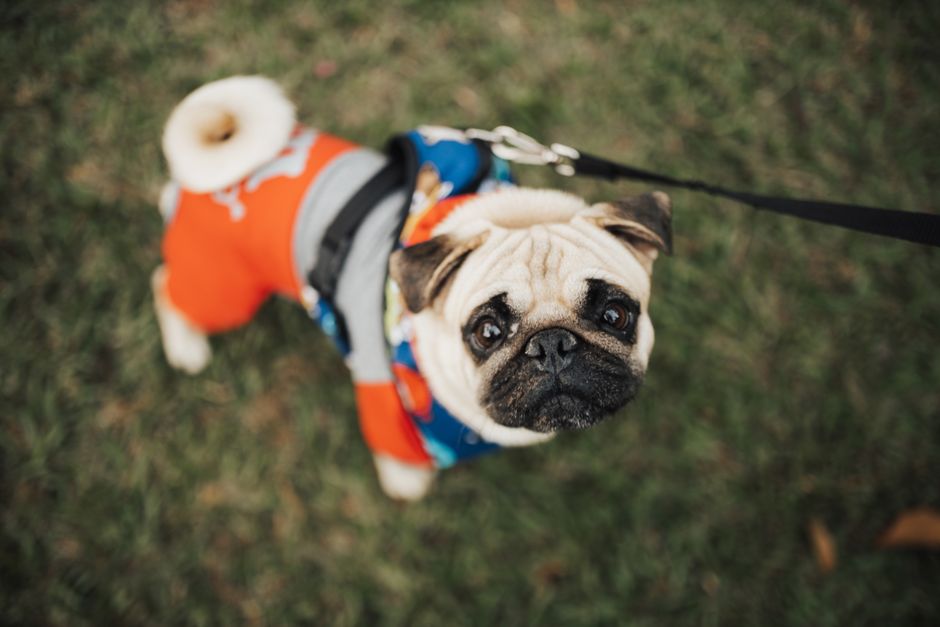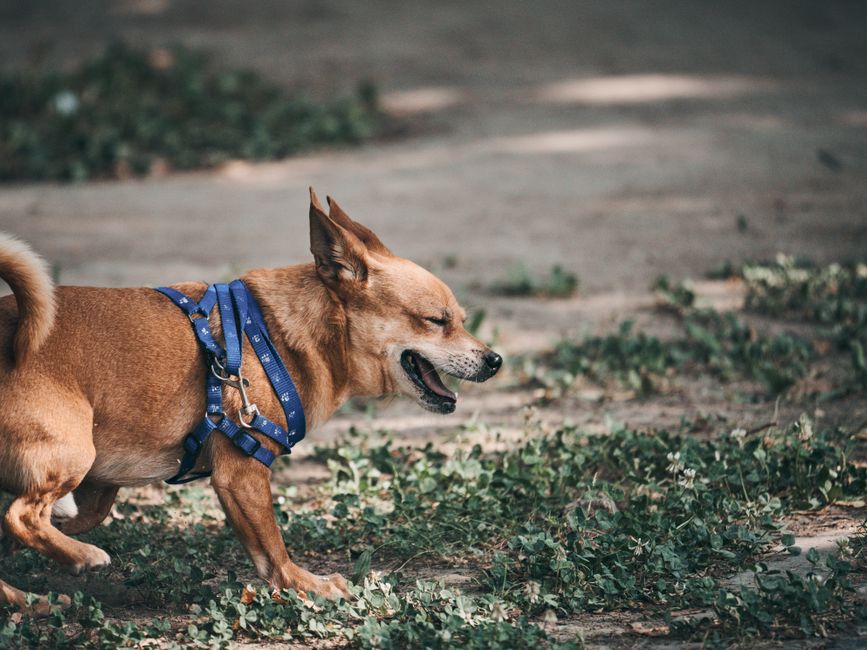
Does your dog need a summer bandana that looks good without causing a rash, trapped heat, or a damp patch under the neck? The safest choice starts with fit and fabric, not the print. A good bandana should sit lightly on the coat, allow air to move, dry between uses, and stay far enough from the skin to avoid constant rubbing.
Why summer bandanas irritate some dogs
Heat, moisture, and friction create the real problem
A bandana rarely irritates skin because of one single material. The usual problem is a combination of moisture, heat, pressure, and movement. A tight knot rubs the same patch of neck during every step. A wet fabric stays pressed against the coat. Sweat, saliva, grass, dust, and grooming products then collect in that warm area. Dogs with short coats, skin folds, allergies, or a history of hot spots often show irritation first.
That is why a light bandana can still cause trouble. Weight matters, but airflow matters more. A thin fabric that dries in 20 minutes may be more comfortable than a thicker cotton square that stays damp for two hours. The goal is not to find a label that promises hypoallergenic comfort. Few bandanas can honestly make that promise. The goal is to reduce the conditions that start itching.
Breathable does not mean automatically skin-safe
Breathable fabric lets air and water vapor move through the weave. It does not prove that the dye, finish, thread, or detergent will suit every dog. Wash a new bandana before the first wear, using fragrance-free detergent and an extra rinse. Avoid fabric softener because it can leave a coating that holds scent and moisture.
My core verdict: choose the lightest material that dries quickly, then test it for 10 minutes indoors. If your dog scratches, rubs the neck on furniture, freezes, or tries to remove it, the bandana has failed before the walk begins.
How to choose a non-irritating fit
Measure the neck before choosing a size
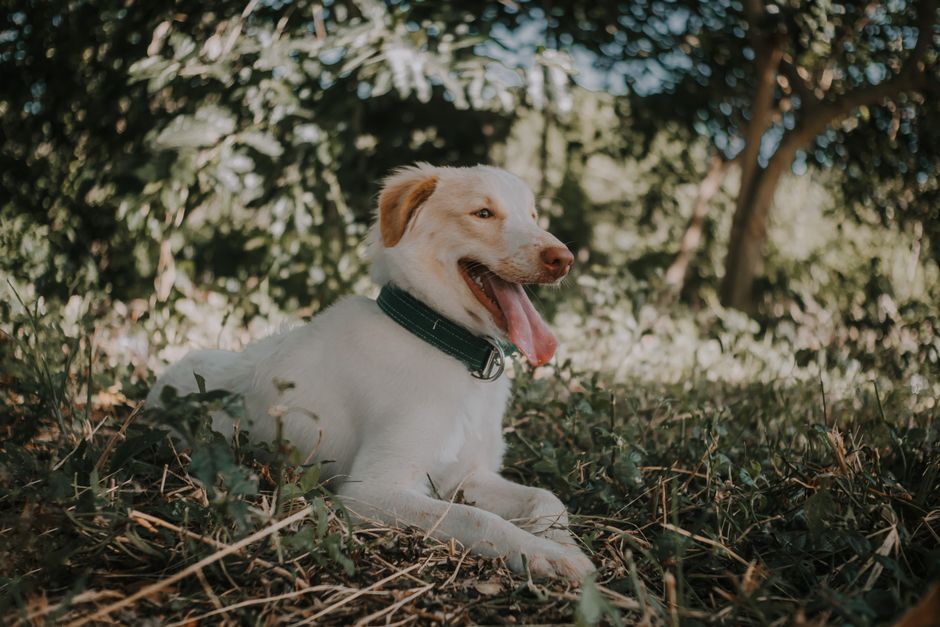
Use a soft tape around the lower neck, where the bandana will sit. Keep the tape flat and snug, but do not pull it tight. Add the product’s size range to that measurement rather than guessing from your dog’s breed. A 35-pound spaniel and a 35-pound bulldog can need very different neck shapes.
After tying or fastening the bandana, slide two adult fingers between the fabric and the neck. The point should stay secure without pressing into the throat. The front point should end above the chest and should never drag on the ground. If the bandana rotates under the jaw, shorten the fold or choose a snap style.
Check the surface, edge, and hardware
Run your fingers over every seam. Reject scratchy embroidery, exposed thread ends, rough hook-and-loop panels, and stiff labels that sit against the neck. A rolled edge is usually kinder than a raw cut edge. Snap closures can give a more repeatable fit than a knot, but the snaps should sit on the side or upper back of the neck rather than directly under the throat.
Look for a single light layer or a loose weave. Double-sided fashion fabric can look attractive but add heat. If the fabric feels warm against your hand after five minutes indoors, it will feel warmer against a dog’s coat during a sunny walk. For sensitive skin, a plain, washable, pale-colored bandana is the better starting point than a heavily decorated one.
Which breathable summer dog bandanas are worth considering?
A quick comparison of real options
My pick for each situation
For a dog with mild skin sensitivity that mainly needs a stylish accessory, the Frisco Coastal Lobster Stripes and Anchors Reversible Cotton Bandana is the best value. Remove it after the walk if the fabric becomes damp.
For actual heat relief, my pick is the Canada Pooch Cooling Bandana. The mesh construction gives it a clear airflow advantage over a thick cotton square, and the maker lists no chemical coolants. For dry climates, the Back on Track Cool on Track Cooling Bandana is the strongest alternative because it cools through evaporation and comes in four size groups. Neither product replaces shade, water, or a shorter walk during dangerous heat.
How to introduce a summer bandana without causing a rash
Use this five-step fitting routine
- Wash the bandana with fragrance-free detergent and dry it fully.
- Let your dog sniff it while it rests on the floor. Reward calm interest.
- Place it loosely over the neck for two minutes indoors. Do not tie it yet.
- Fasten it using the two-finger rule, then watch your dog walk, sit, shake, and lie down.
- Remove it after 10 minutes and inspect the neck under bright light.
Look for pink skin, damp fur, broken hairs, flakes, or a clear line where the edge sat. Any of those signs means the fit, fabric, or wear time needs to change. Do not assume your dog will adapt to discomfort.
Build wear time slowly
Start with 10 minutes, then move to 20 minutes on the next calm day. Keep the first outdoor session short and dry. Wet cooling products need more careful checks because moisture changes the way fabric moves against the skin. Rewet them only when needed, squeeze out excess water, and remove them when the dog comes indoors.
Never attach the leash to a bandana. Remove it for crate time, unsupervised play, roughhousing, swimming, and chewing sessions. A bandana is clothing, not a restraint. The practical winner here is the product your dog can wear calmly while you can still inspect the neck quickly.
Questions to answer before the first walk
Can cotton irritate a dog’s skin?
Yes, but cotton is not automatically a poor choice. Its main risk is staying wet against the coat. A lightweight cotton bandana can work well for a dry photo session or a short walk, especially after washing with fragrance-free detergent. Remove it when it becomes damp, dirty, or warm. If the dog has a known fabric reaction, test a small area indoors before a full outing.
Should a cooling bandana touch the skin?
It can touch the coat, but it should not press tightly against the skin. Dogs have different coat lengths, so the right position varies. The bandana should rest lightly, allow two fingers of space, and stay free of wrinkles. A wet item that stays bunched under the jaw creates more rubbing than cooling.
How long can a dog wear one?
Start with 10 to 20 minutes and inspect the neck. A calm, dry-wearing dog may tolerate a longer outing, but heat, humidity, moisture, and activity change the answer. Remove the bandana at the first sign of scratching or discomfort. If your dog is panting heavily, weak, confused, vomiting, or struggling to stand, remove clothing and seek urgent veterinary help rather than adding cooling gear.
The safest choice is a simple, testable bandana
Use the smallest useful amount of fabric
The best breathable summer dog bandana is not the largest or most technical option. It is a light, washable piece that fits without pressure, dries quickly, and can be removed in seconds. For sensitive skin, begin with a plain cotton style for fashion or a mesh evaporative style for dry heat. Test it indoors before trusting it outside.
Let comfort decide the final style
Inspect the neck after every early wear. Keep two bandanas in rotation so one can dry completely while the other is being washed. Replace any item with rough seams, stretched snaps, persistent odor, or stains that remain after cleaning. The category is moving toward lighter mesh, cleaner closures, and cooling materials that need less bulk. That is good news for dogs that want summer style without paying for it with itchy skin.